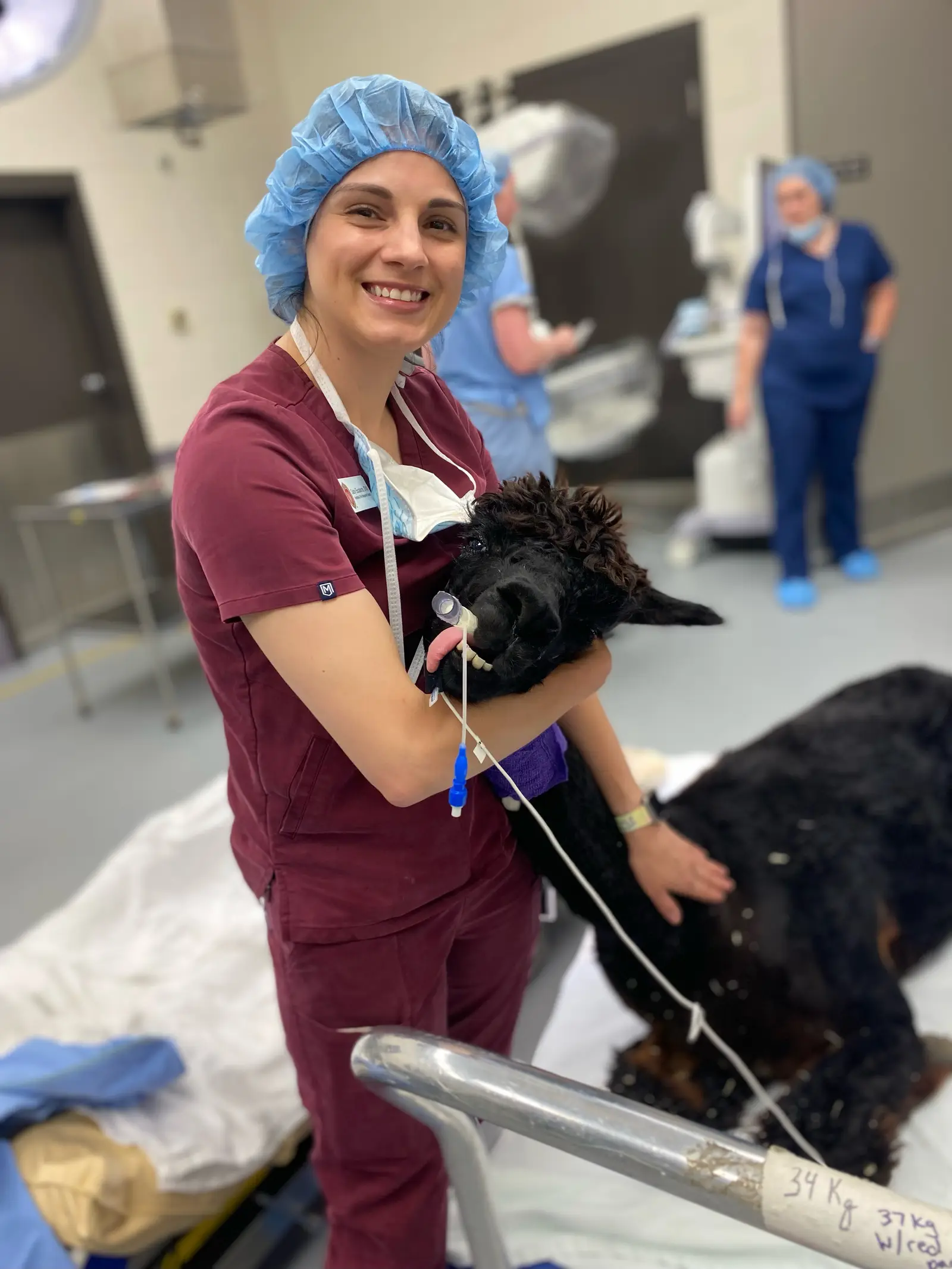
Anesthesiologist FAQ
What is a Veterinary Anesthesiologist?
A specialist focused on anesthesia and pain management across all animal species — across varying procedures and disease states.
The Role
What does a veterinary anesthesiologist do?
Veterinary anesthesiologists are the specialists who ensure animals receive safe, effective, and pain-free anesthesia during medical procedures. They are responsible for:
Designing and implementing anesthetic plans tailored to each patient’s specific needs
Understanding the pharmacology of various anesthetic agents and their effects on various species and disease states
Monitoring vital parameters and adjusting anesthetic depth given the patient's needs
Ensuring appropriate pain control before, during, and after any procedure
Addressing emergency situations and complications during anesthesia
Providing advanced techniques like ultrasound-guided nerve blocks and paralysis monitoring
Supporting and supervising veterinary professionals in appropriate anesthesia care and training veterinary support staff
The Path
How do you become board-certified?
Twelve years of education and supervised training separate a first-year undergraduate from a board-certified specialist.
Education Path
4-year undergraduate degree
4-year Doctor of Veterinary Medicine (DVM) degree
1-year rotating internship (or equivalent alternative)
3-year residency in veterinary anesthesia and analgesia
Board certification through the American College of Veterinary Anesthesia and Analgesia (ACVAA)
Specialized Skills
Advanced monitoring techniques
Species-specific anesthesia protocols
Advanced pain management and techniques
Emergency anesthesia procedures
Research and teaching capabilities
Why It Matters
A critical role in modern veterinary medicine.
From safeguarding patients to sharpening teams, veterinary anesthesiologists raise the standard of care at every stage of a procedure.
Patient Safety
They ensure the highest standards of safety during anesthesia for all species.
Pain Management
They provide expert pain control (analgesia) for improved patient conditions during and after medical procedures to ensure successful recoveries.
Complex Cases
They handle high-risk patients and complicated procedures for all species.
Education
They train other veterinary professionals in anesthesia best practices to support the entire veterinary team and increase overall success rates.
Research
They advance the field through clinical research and innovation.
Beyond General Practice
Advanced knowledge and techniques.
Board-certified anesthesiologists bring specialized skills that are not commonplace in general practice — expanding what your team can safely do.
Ultrasound-guided nerve blocks
for targeted pain relief
Paralysis Monitoring
for complex ophthalmic procedures
Advanced monitoring knowledge
to catch early signs of anesthesia complications
Species-specific protocols
for exotic animals and wildlife
Appropriate emergency anesthesia
for critical patients and complex cases
When to Reach Out
When should you consult a veterinary anesthesiologist?
Consider reaching out in either of these scenarios:
High-Risk Patients
Animals at crucial life-stages (pediatrics, geriatrics, pregnancy)
Patients with heart, respiratory, gastrointestinal, or endocrine disease
Critically ill or emergent patients
Cases involving high-risk species (e.g. exotic pets and wildlife)
Patients with previous adverse anesthetic event history
Complex or High-Risk Procedures
Long or complicated procedures
Procedures requiring advanced pain management or specialized monitoring
Procedures that carry high morbidity risk (e.g. excessive bleeding or respiratory compromise)
Procedures that commonly prove difficult for anesthetic maintenance or recoveries
Any procedure where a team would like to learn new or advanced skills to improve outcomes
Ready to Partner
Ready to elevate your anesthesia care?
MACvet™ brings board-certified anesthesia expertise directly to your practice — whether you need support on a complex case or want to grow your team's skills.