Does Using Tape to Secure Blood Pressure Cuffs Impact Accuracy?
A prospective study of 28 large-breed dogs examines whether using tape as a secondary fastener on Doppler blood pressure cuffs introduces clinically significant measurement variability.
Does using tape to secure blood pressure cuffs impact accuracy of measurements? Does the type of blood pressure cuff vs type of tape vs type of patient matter? Can tape still be used to secure blood pressure cuffs or is it best practice to replace cuffs when adhesive is exhausted?
Objective
Compare whether large-breed canine Doppler blood pressure (DBP) measurements are equivalent with or without use of tape as a secondary fastener on hook-and-loop fastener (aka Velcro) blood pressure cuffs.
Study Design
Prospective analysis of dogs > 20kg (n = 28) — small sample size.
- All dogs deemed healthy via standardized blood-donor screening methods
- Any dogs with previous medical history and/or on medications that could impact systemic blood pressure were excluded
- Only dogs that tolerated DBP measurement without sedation were enrolled
- Anxiety Scores (Scansen et al) were assigned to all enrolled dogs & any dog with score of 3 was excluded — subjective scoring system used!
DBP measurements were performed via 2 methods:
- Without Tape — a new BP cuff was used for each dog & cuff size was chosen based on ACVIM Consensus Guidelines (30-40% limb circumference)
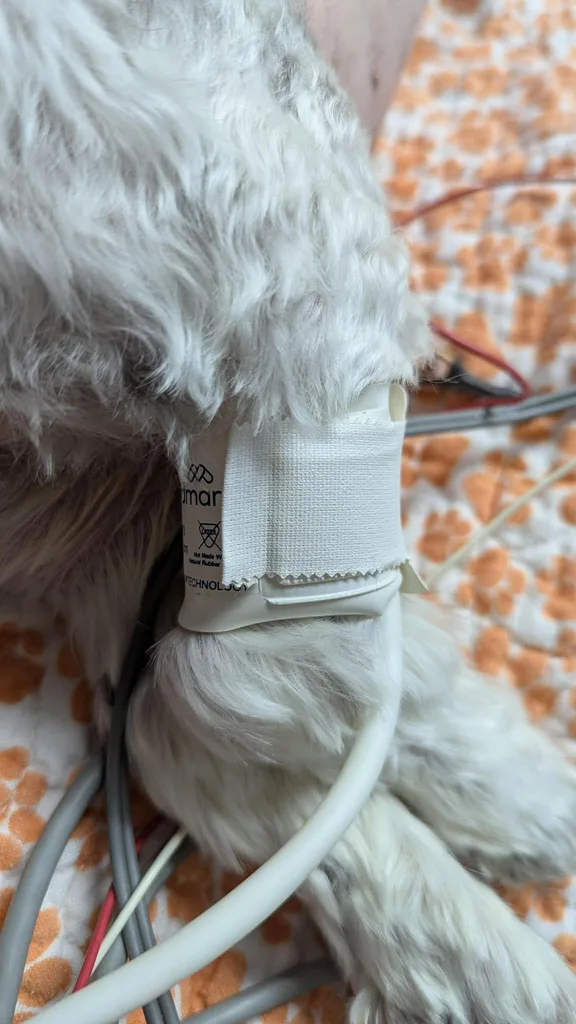
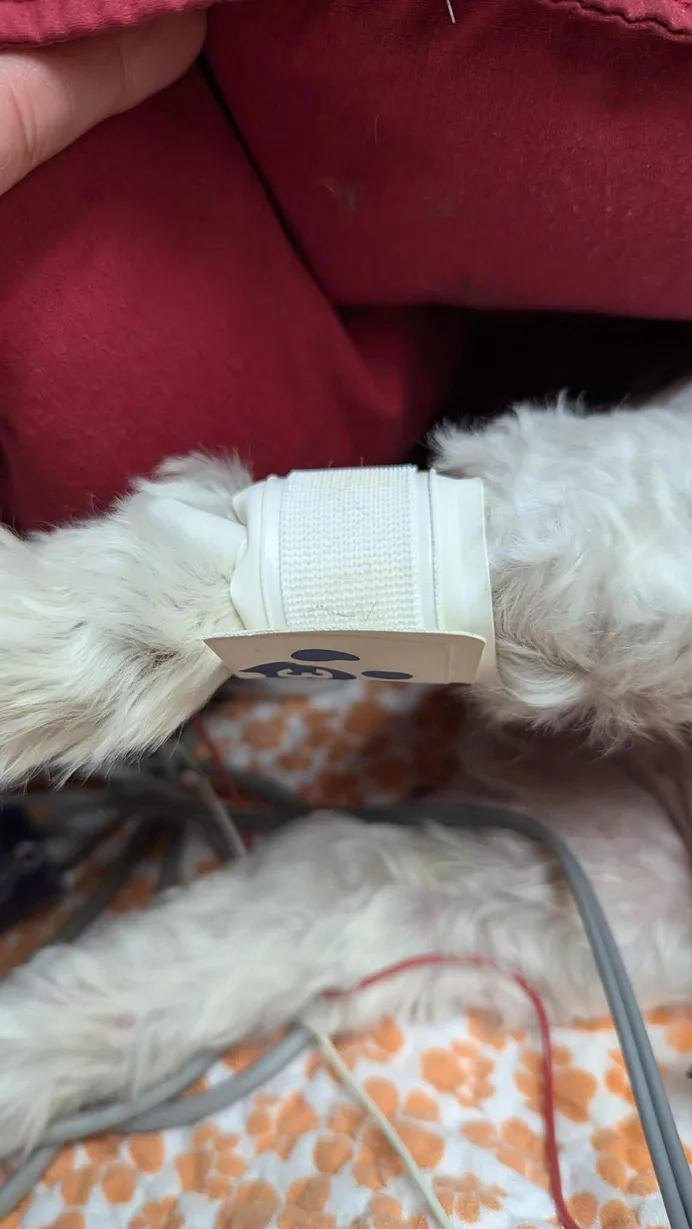
- With Tape — cuff selection same as above. Inside aspect of BP cuff had a 1-inch piece of porous medical tape placed over the fastener strip to mimic “deterioration” and reduce adhesive properties of the cuff’s inherent Velcro fastener mechanism. Outside aspect of BP cuff had a 1-inch piece of porous medical tape loosely placed over the cuff’s end at a length of ⅓ circumference of the limb
Consider: could the subjective decision regarding tape length and/or placement impact results? What objective measures of tape tension could have been taken into account?
All dogs were allowed a 5-min acclimatization period prior to DBP measurements. DBP measurements were performed by 2 trained observers. Some dogs had their Pet Parent(s) present during DBP measurements.
Consider: can we objectively assess the impact of a Pet Parent’s presence on each dog’s DBP measurements? How do measurements compare to dogs without a Pet Parent present?
- Each dog had 12 DBP measurements performed — 6 without tape and 6 with tape
- DBP measurements were performed based on ACVIM Consensus Guidelines
- Recumbency was not standardized (either L or R lateral)
- Limb used for measurement was standardized (upward thoracic limb; dependent on recumbency)
- The first reading was discarded and only the subsequent 5 readings were averaged for analysis
- HR was also recorded with each DBP measurement
- Starting method used (tape or no tape) was alternated, but without structured randomization — uncontrolled factor of variability that could impact the subsequent 5 DBP measurements for each dog
DBP measurement level of significance was a difference of +/- 10mmHg. Normotension classified as DBP < 140mmHg. PreHypertension classified as DBP 140-159mmHg. Hypertension classified as DBP 160-179mmHg. Severe Hypertension classified as DBP > 180mmHg.
Results
Sample size & demographics:

- Small sample size — only 28 dogs total
- Large age range — 8 month-old to 11 year-old dogs enrolled
- Variety of breeds — mixed-breed (majority), Labrador, Golden Retriever, Presa Canario, German Shepherd, English Mastiff, Rhodesian Ridgeback, Weimaraner, Giant Schnauzer, Greyhound
Results based on average of 5 recorded measurements for each method:

- There was a mean difference of +2.4mmHg for DBP measurement with tape compared to without tape
- There was no statistical significance with this finding
- DBP measurements without tape were less variable when measured as the first method of measurement (rather than second method of measurement)
- When tape method used first, readings were on average almost 20mmHg higher for with tape method compared to without tape — there was statistical significance with this finding
- Regardless of method used, the second method of measurement averaged 4mmHg higher readings compared to the first method — there was no statistical significance with this finding
Systemic blood pressure classifications:
- Almost 20% of dogs had DBP measurements that were classified differently when measured with a different method (with or without tape)
- Of the dogs that classified as normotension (25/28): 2/25 were normotensive when measured without tape, but classified as pre-hypertensive when measured with tape
- 1/25 was normotensive when measured without tape, but classified severely hypertensive when measured with tape
Conclusions
- Overall, there was no statistically significant difference between DBP measurements (~3mmHg) with or without tape across a group of dogs
- However, significant differences were found within individual dogs for DBP measurements with or without tape
- With Tape method often resulted in measurements much higher or lower than Without Tape measurements (approximately 54% of the time)
- Many dogs (18%) had their systemic blood pressure classification changed depending on DBP measurement method (With or Without Tape)
- Variable DBP measurements between With or Without Tape methods could result in alterations in patient systemic blood pressure case management
Limitations
- Sample size was quite small, which makes it difficult to discover overall statistical differences
- Inter-individual variability between both DBP measurement methods did show statistically significant differences — consider: can we extrapolate these individual differences across all dogs?
- Variety of breeds assessed may also create breed-variability that was not assessed in the results
- Tape length and tension was not standardized — impact of the tape’s coverage over the BP cuff and amount of pressure applied when adhering tape could impact results of DBP measurements (both between dogs and within an individual dog)
- Order of starting measurement method was not standardized — due to lack of standardized randomization of starting method, more dogs had with tape as their first measurement method (17 with tape vs 11 without tape). Consider: does the first method used impact subsequent measurements for the second method used?
- Direct / Invasive blood pressure (IBP) was not measured for comparison — IBP or arterial blood pressure is gold-standard for NIBP comparison
Without further evidence, it is gold-standard care to not use tape as a secondary fastener & instead utilize a new BP cuff for accurate Doppler BP measurements. It is important to ensure consistency of how BP measurements are performed, particularly for patients with concurrent disease and/or receiving medical management that alters systemic blood pressure.
Want to Learn More?
Whether you're looking for hands-on training or expert consultation, MACvet™ is here to support your team and your patients.