Do Certain Cat Breeds Have Higher Anesthetic Risk?
A multicenter study of nearly 15,000 feline anesthesia cases reveals which breeds and morphologies face higher anesthetic mortality—and why ASA status and brachycephaly matter most.
Do certain breeds of felines have higher anesthetic risk? Which cat breeds are predisposed to experiencing anesthetic mortality? Should anesthetic care be based primarily on breed, overall health status, or a combination of both?
Objective
Are there distinguished feline breeds with higher anesthetic risk — both before & after ASA Status assessment? Does ASA Status across these breeds correlate with their anesthetic mortality rates? Are these risks solely breed-specific or multifactorial?
Study Design
Multicenter analysis of around 15,000 feline anesthesia cases across North America, South America, Europe, Asia, and Oceania. Analysis categorized whether cats were alive or dead within 48hr of anesthesia. Excluded cases where death was due to euthanasia or unrelated to anesthesia. Total cases analyzed: n = 14,845 — a very large sample size for veterinary medicine, which adds validity to results.
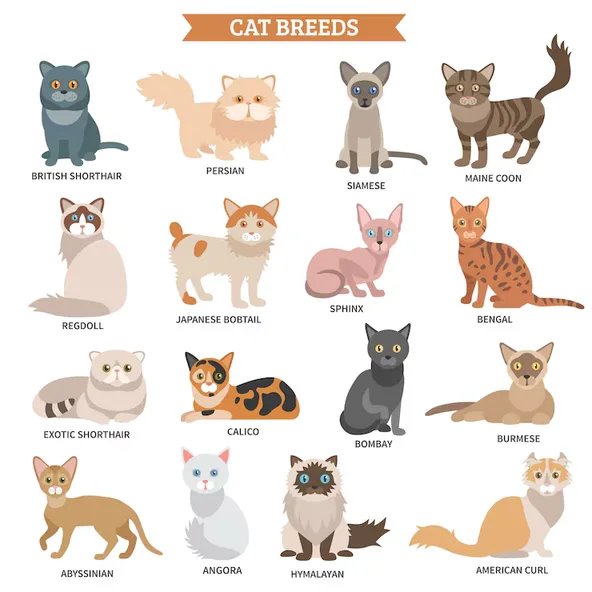
Cases were primarily grouped by breed (based on genomic clustering):
Consider: is genomic similarity equivalent to morphologic or physiologic similarities?
- European/Domestic Lineage — largest group; any European or Domestic-related shorthairs
- Ticked Lineage — Abyssinian, Somali, Oriental Shorthair
- Tabby-Patterned Lineage — Maine Coon, Bengal, Norwegian Forest Cat, Siberian, Toyger, Highlander
- Pattern-Masked Lineage — remaining breeds with masked or complex coat patterns
Cats with brachycephaly phenotype were a separate variable & grouped based on CT-morphologic studies (n = 1,455):
- Extreme Brachy (n = 303) — Persian, Exotic & Himalayan breeds
- Moderate Brachy (n = 1,152) — British Shorthair, British Longhair, Scottish Fold
- Non-Brachy (n = 14,050) — all remaining breeds
Results
Total number of breeds analyzed = 42 cat breeds. Largest breed sample size = European/Domestic Shorthair (n = 10,007). Smallest breed sample size = Turkish Angora (n = 28).
Overall mortality within 48hr of anesthesia: alive n = 14,870 & dead n = 94. Overall anesthetic-related mortality rate = 0.63% (n = 94 / 14,964).
ASA status showed significant impact on anesthetic-related mortality rates:
- ASA 1 = 0.07%
- ASA 2 = 0.25%
- ASA 3 = 0.92% — higher compared to overall cat anesthesia-mortality rate of 0.6%
- ASA 4 = 7.01% — higher compared to overall cat anesthesia-mortality rate of 0.6%
- ASA 5 = 33.33% — higher compared to overall cat anesthesia-mortality rate of 0.6%
Anesthesia-mortality causes were primarily respiratory or cardiovascular events. Respiratory cause of anesthesia-related mortality increased in brachycephalic cats:
- Non-Brachys = 30% experienced respiratory-related mortality
- Moderate Brachys = 43% experienced respiratory-related mortality
- Extreme Brachys = 62% experienced respiratory-related mortality
No similar pattern was found for cardiac-related anesthesia-mortality.
Breed-specific mortality rates: Persians had the highest risk of anesthesia-related death.
Consider: Authors report there were wide confidence intervals observed with rare breeds and indications of considerable statistical uncertainty in these results.
- European/Domestic Shorthair group served as the largest & reference population with anesthesia-related mortality rate of 0.64%
- Some breeds showed anesthesia-related mortality rates of 0.00% — Maine Coon, British Longhair, Sphynx, Burmese
- Persians had a significantly higher anesthesia-related mortality rate of 1.67%
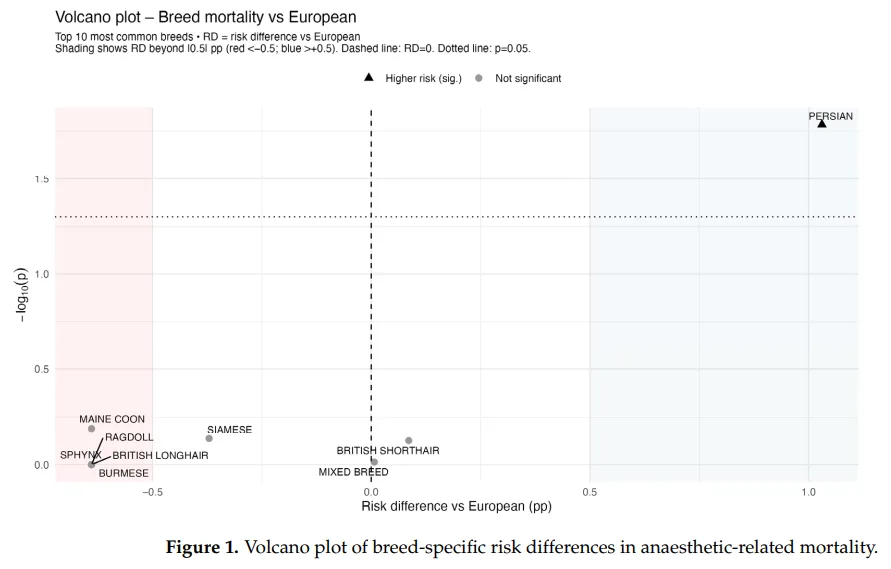
Lineage-specific mortality rates: no significant risk differences found when considering impact of lineage (compared to European/Domestic lineage).
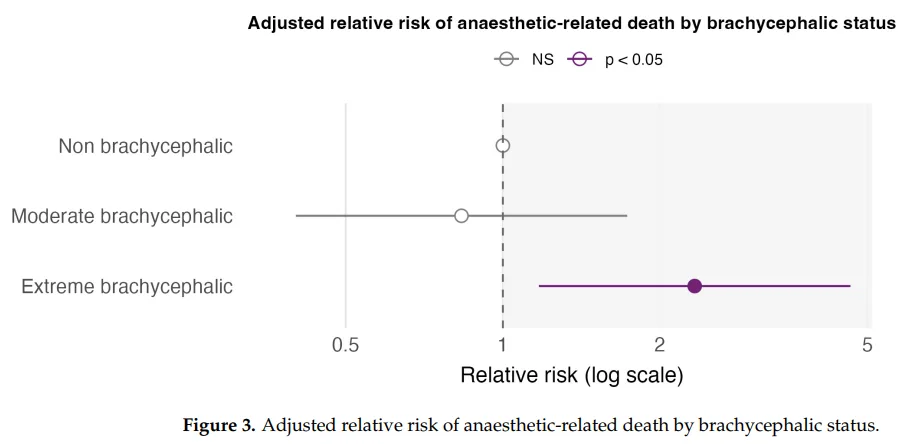
Brachy-specific mortality rates: overall significantly higher rate of anesthetic-related mortality when compared to the Non-Brachy group:
- Non-Brachy = 0.58%
- Moderate-Brachy = 0.78%
- Extreme-Brachy = 0.99%
ASA-adjusted Brachy mortality rates: only the Extreme-Brachy cats showed a 2x higher risk of anesthetic-related mortality.
Consider: Authors recommend caution with interpreting this result due to the small number of deaths in the Extreme-Brachy group.
Conclusions
- Overall feline anesthesia-related mortality rates are consistent at 0.6% (previous canine study rate was 0.7%)
- No significant differences in anesthesia-related mortality were found across cat lineages
- The feline breed that showed highest anesthesia-related mortality rate was Persians
- While some breeds showed 0.00% anesthesia-related deaths, the Authors urge caution with those results due to limited sample sizes for those breeds
- Morphologic extreme-brachycephaly features correlated with increased risk of anesthesia-related mortality — this was correlated with a respiratory cause-of-death compared to non-brachy feline breeds
- ASA Status correlates significantly to anesthesia-related mortality rates in cats
- After ASA-adjustment, Persians remained with a statistically higher risk for anesthesia-related death compared to European/Domestic Shorthair cats
Limitations
Various case factors that may have altered results were not analyzed:
- Anesthetic agents utilized (e.g. were anesthetic agents with more respiratory-depression properties used more often in brachy cats?)
- Pre-anesthetic diagnostics and/or physiologic variables (e.g. co-morbidities either based on diagnostics or physical exam were not considered)
- ASA Status is not all-encompassing (e.g. urgency of anesthesia, surgical invasiveness, duration of anesthesia, etc.)
- Small sample size for specific breeds and/or lineages (e.g. >10,000 Domestic Shorthair cats vs <250 Maine Coon cats)
- Anesthesia-related morbidity was not assessed across breeds — are certain breeds more likely to experience anesthetic-related morbidity events, but not necessarily mortality or death?
While overall anesthesia-related mortality rates are low in most cats, certain breeds (Persians + Extreme-Brachy cats) are more at risk. “ASA Status-focused & Morphology-aware” anesthetic techniques should be considered when providing gold-standard anesthetic care.
Want to Learn More?
Whether you're looking for hands-on training or expert consultation, MACvet™ is here to support your team and your patients.