Facemask vs Flow-By: Which Preoxygenation Method Is More Effective?
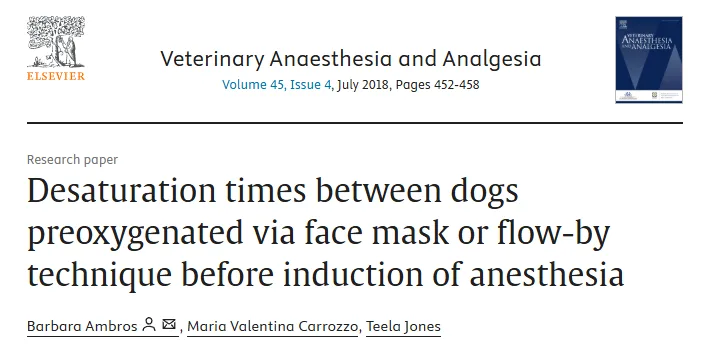
A crossover study of 6 dogs compares facemask vs flow-by preoxygenation methods, revealing significant differences in oxygenation variables and time to desaturation before anesthetic induction.
View the original post on Instagram
Are you curious if the way your team provides O2 supplementation is effective or best-practice? Does your team preoxygenate your pre-anesthetic patients? Should you? How does your team provide O2 supplementation? What scenarios & what patients benefit from preoxygenation?
Objective
Is there a difference in how long it takes a patient to desaturate (i.e. drop in SpO2 to 90%) when providing oxygen via two different methods: facemask vs flow-by?
Study Design
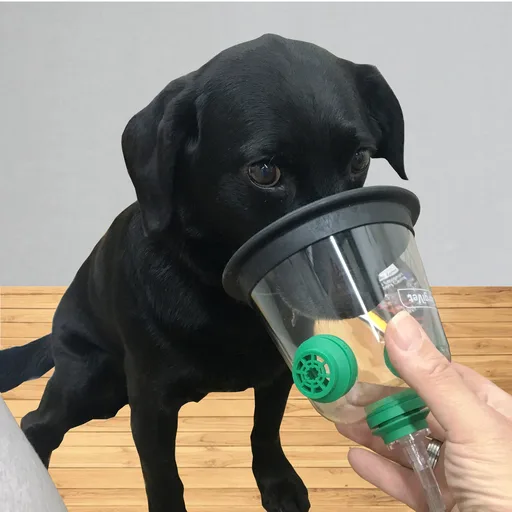
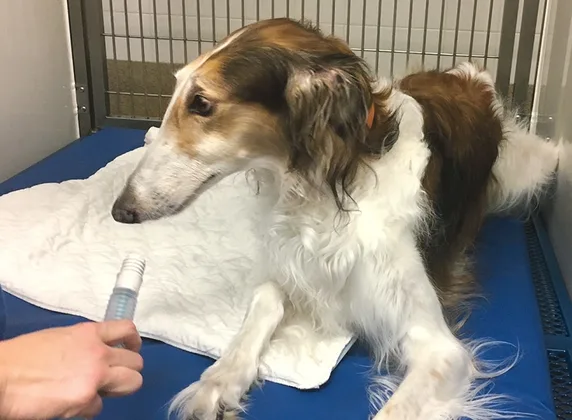
Same dog (n = 6) anesthetized twice every 2 weeks to receive each of the two treatments: facemask vs flow-by O2.
Crossover Design — avoids results-variability due to differences in each individual. n = 6 is a very small sample size; this is common in vet medicine (compared to human medicine) due to accessibility issues — Study Limitation!
Dogs were sedated to place intratracheal catheter for sampling of tracheal oxygenation variables (FiO2 — inspired O2 % and FeO2 — expired O2 %).
Dogs received same protocol for each treatment — avoids results-variability due to drug differences: dexmedetomidine + acepromazine + butorphanol IM.
Dogs were preoxygenated at the nares for 3 minutes either via facemask or flow-by prior to anesthesia. Other studies have shown adequate preoxygenation requires at least 3 minutes to be effective. O2 flow rate 100 mL/kg/min via Circle Y-Piece circuit.
Anesthesia was induced with propofol until apnea occurred. Time to desaturation from induction was measured until 90% SpO2 reached and dogs were then intubated to allow for adequate oxygenation + ventilation.
Pulse oximetry was measured lingually.
Consider: does SpO2 site matter?
Variables assessed: time to desaturation (seconds) at SpO2 = 90%, FiO2 + FeO2 (%) — content % of oxygen being inspired & expired, SpO2 (%) — prior to and after O2 supplementation, PaO2 (mmHg arterial blood O2) — prior to O2 supplementation, 5 sec post-induction, and every 30 sec until desaturation point reached.
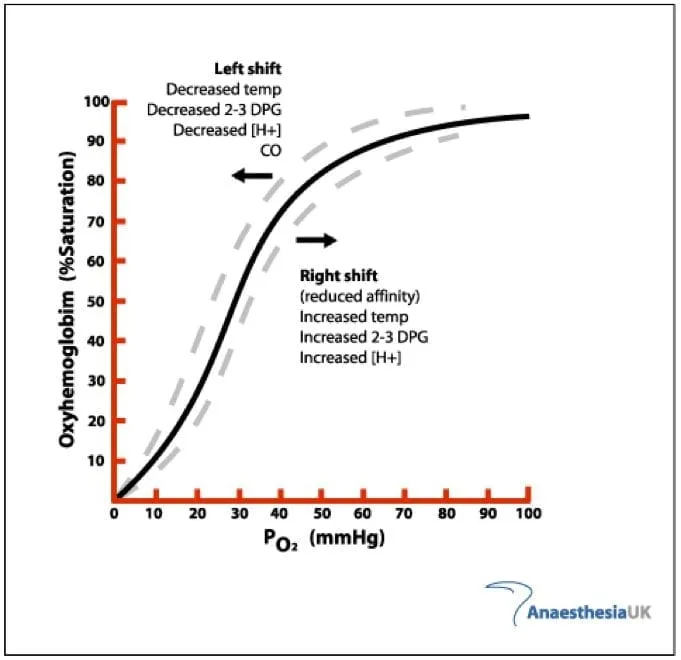
Consider: how do each of these variables relate to oxygenation status?
Results
Oxygenation variables (FiO2, FeO2, and PaO2) were significantly higher in dogs receiving facemask preoxygenation compared to flow-by method:
- Facemask Dogs: FiO2 = 90%, FeO2 = 83%, PaO2 = 390mmHg
- Flow-by Dogs: FiO2 = 30%, FeO2 = 23%, PaO2 = 130mmHg
Consider: despite the fact that the FiO2 = 100% from a medical circuit (remember: room air = 21% O2), what O2 % the patient actually inspires into their respiratory tract is dependent on how much of that 100% is saturated around their respiratory structures (e.g. nares & oropharynx). Method of delivery is a factor — facemask delivers 3x the O2 % compared to Flow-by method (delivers barely above room air O2 %).
Time to desaturation (SpO2 = 90%) took significantly longer to reach in dogs preoxygenated via facemask compared to flow-by method:
- Facemask Dogs: desaturation time = 190 seconds (3 min)
- Flow-by Dogs: desaturation time = 65 seconds (1 min)
Consider: those extra 120 seconds (2 minutes) can make a huge difference in how quickly a patient reaches critically low oxygenation status.
Preoxygenation is extremely important in all cases (including sedations), but especially in the following scenarios:
- Difficult intubations — cat laryngospasms, brachycephalics, oropharyngeal masses, jaw abnormalities, certain species (e.g. rabbits/camelids/swine)
- Reduced FRC (functional residual capacity) — obesity, abdominal mass effects (e.g. pregnancy, effusion, hepatomegaly or mass)
Conclusions & Limitations
Facemask preoxygenation was superior to the flow-by method in preventing desaturation (SpO2 = 90%). Facemask preoxygenation is more effective in preventing apneic patients from reaching critically low oxygenation status.
Common Concern: “My patient isn’t tolerating the facemask. How do I preoxygenate effectively then?”
- Almost all patients will tolerate facemask preoxygenation if properly sedated — it is crucial for certain cases that they are preoxygenated properly!
- Did we sedate this patient appropriately? Consider: appropriate drug combo or dose for patient?
- Did we allow enough time for sedation protocol to work? Consider: do you know the normal onset time for your drugs & how route of administration may impact that onset time?
Limitations:
- Small sample size — larger sample size would help support these findings if same results also found in more individuals receiving the same treatment
- CV parameters (not assessed in this study) & site of arterial blood gas measurement may impact PaO2 values
Make sure to preoxygenate ALL patients with a facemask for gold-standard anesthesia care.
Source
Ambros B, Carrozzo MV, Jones T. 2018. Desaturation times between dogs preoxygenated via face mask or flow-by technique before induction of anesthesia. Veterinary Anaesthesia and Analgesia 45(4):452–458.
doi.org/10.1016/j.vaa.2018.03.004Educational content for veterinary professionals. Not a substitute for clinical judgment or an established VCPR. See our Medical Disclaimer.
Get In Touch
Want to learn more?
Whether you're looking for hands-on training or expert consultation, MACvet™ is here to support your team and your patients.